Friday, December 4

Gideon


In those days Israel had no king; everyone did as he saw fit. (Judges 21:25)

The Judges -- The Origianl Superheros
Gideon lived during a time in Isreal's history shortly after they escaped from Egypt into the land that God had promised to take them to. After Moses took them to the land, Joshua took over and led the people in taking and settling the land. After Joshua died, the Israelites were left pretty much without a leader, but there were still many nations around them that wanted to take advantage of them, and with no leader they were pretty helpless. God's solution to this situation was the judges. The judges were like temporary leaders who God raised up from among the people to pull the people together enough to fight off whatever enemies were currently threatening Israel. The judges also helped the people of Israel to know better how to serve God, and would hold them accountable to doing so. They had no official authority--people would rally to them when they saw God working in them. When a judge would come, God would use them to defeat the enemy and draw God's people back to him, them when a judge would die the people would start to fall back to their sins.
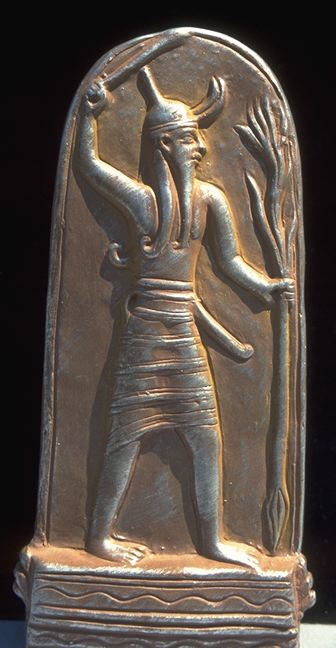
Gideon was one of these judges, and God empowered him to deliver Israel from Midian. God had sent the Midianites against Israel as a wakeup call, to let Israel know He wasn't pleased with how they were acting (see Judges 6:1-6; they had been worshipping idols, particularly Baal and Ashera, a god and goddess of fertility and agriculture from what I understand). Midian starts to terrorize Israel, coming mainly around harvest time to steal the food that Israel planted and worked for. After seven years, the people of Israel cry out to God for help, and God prepares Gideon for the job. First, God had Gideon tear down his town Baal altar and its Ashera pole, replace them with a real altar, and sacrifice a bull on it to God. This establishes Gideon as a servant of the LORD and a judge in the eyes of the people (and earns him a sweet nickname, Jerub-baal, "let Baal contend with him").
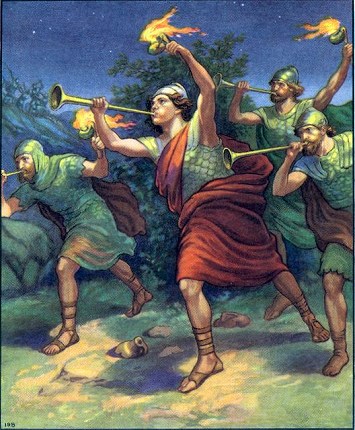
Next, God has Gideon get an army together. The army starts out as 32,000 men, but God has Gideon dismiss those who are either afraid or drink funny, bringing the number down to 300. With these men, Gideon sneaks down to the Midian camp at night. They surround the Midianites, then all at once break jars, wave torches, and blow trumpets. The Midianite army wakes up too scared to think straight--they kill most of each other, then run away. After this, Gideon is pretty popular among the Israelites (understandably), so they ask him to be their king. Gideon turns it down (we find out later that God never wanted Israel to have a king), telling them neither he nor his sons will ever be kings over them.

Zero to Hero
One of the most notable things about Gideon's life is the way that God calls him. Take a look at Judges 6:11-16. It starts with God sending and angel with a message to Gideon. Gideon is threshing wheat--but not in the normal way. To thresh wheat, you throw it up in the air and let the wind blow away the chaff, which is lighter, so that only the kernels of wheat, which are heavier, fall back down. Out of fear of the Midianites, Gideon was hiding in a winepress while doing this, which would severely cut down on the wind available. We can often be put into similar situations, doing things that don't work very well because we fear the consequences of doing them the right way. While Gideon is doing this, God gives him this message: The LORD is with you, O mighty man of valor.

What's so interesting about this that there is no reason for God to call Gideon a "might man of valor." He hasn't done anything yet. So far, Gideon's role has been one consisting entirely of hiding from the Midianites. When he hears this, Gideon has trouble believing it, asking 'How can you say God is with us, when Midian is totally dominating us? Isn't this the same God that our fathers told us brought them out of Egpyt and did all sorts of miracles? That God has abandoned us.' God tells Gideon, 'I have not abandoned you or your people. And I will be with you as you lead an attack against Midian.' Even though Gideon was living in fear and blaming his tough times on God for not helping him, God came to him and told him that He would use him to work His will on earth. God tells him "Go in this might of yours" even though Gideon knows he is the weakest man in a weak clan (see Judges 6:15). So what might is God talking about? What valor is God talking about? The might and valor that come from the very first statement made to Gideon: The LORD is with you, O mighty man of valor.

When Gideon had no might (he was weakest of the weak) or valor (fear had him threshing wheat in a winepress) of his own, God took him aside and spoke a word into his life: I declare you to be a mighty man of valor. This is not a word of recognition for what Gideon has done--he hasn't done anything yet. We would expect this statement to come from God after Gideon defeats Midian, not before. But God can and does speak it before Gideon has earned it.

Fireproof
This comes to the core of the story of Gideons life. When a person reads this story, and sees the way that Gideon lived his life, it makes us ask, "How can I live a life like that?" And as we look, we see the key lies in God's word that He spoke to Gideon that changed his life: The LORD is with you, mighty man of valor. To live like Gideon, we need that same might and valor spoken into our lives. So how does that work? The Bible tells us it rests on being told "The LORD is with you." The life of a person that destorys idols and leads a nation depends on the the LORD declaring His prescence in their life. This is where this Old Testament story brings us: we need the LORD to declare his prescence in our lives if we are ever to really live. Reading about Gideon makes us ask, "How can I have the LORD declare that of my life? To say to me, 'The LORD is with you, O mighty man [or woman] of valor'?"

Friday, November 20

Shadrach - Meshach - Abednego

These three men together show us a solid example of how God can be trusted to stick to his promise that his people will not be burned. This story is from Daniel 1 and Daniel 3.

Thier story starts when the people of Judah are defeated by Babylon. These three, along with many others considered to be "worth training" by the Babylon government were taken to Babylon to be educated and made into men that would strengthen the Babylonian empire by their service to the king. Soon, they earn high ranks among the king's officials.

The King's Idea

Then the king gets a great idea: if he gets all of his officials to get together and worship the same god, that would really improve the unity of the empire, and improve the loyalty of his officials to him. So the king erects a ninety foot tall statue made of gold, and commands that everyone come stand in front of it, and when the band starts playing everyone has to bow to the statue. Anyone who doesn't get's thrown into a furnace.

It's impressive the way the king sets this up. He puts this statue out on a plain so that as tall as it is, you could see it from miles off, and he also puts together a huge band (Daniel 3:5) of all the most popular instruments, so everyone will know just how big of an affair this is. This king knows how people are so strongly affected by music and by impressive size.

Refusing to Bow

Next, the king strikes up the music. Imagine hundreds of government officials all standing out on a plain, bowing to an idol as music plays. Shadrach, Meshach, and Abegnego were in that crowd, and as hundreds of the people they work with everyday and the people they answer to or give orders to all bow down around them, they don't bow. It doesn't take long to find three guys standing in a crowd that is bent over, so these three are taken to the king, and the proposal that the kings gives them is something we would do well to pay attention to.

In Daniel 3:13-15, the king gives them a second chance, and if they will bow to the statue the king made this time when the music plays, the king will forgive them, but if they refuse, the king will throw them into the furnace. He finishes by asking them, "who is the god who will deliver you out of my hands?"

Shadrach, Meshach, and Abednego respond to this by telling the king that the God can deliver them from the furnace, and will deliver them from the king’s hand. (Daniel 3:17) They add that no matter what God does, they will not compromise their service to God by bowing when the king commands.

A Son of the Gods

For their refusal, the three men are thrown into fire, but as the king watches, he stands up in surprise and turns to his counselors, and asks them, “Did we not cast three men bound into the fire?” “True, O king,” they tell him. He replies, “But I see four men unbound, walking in the midst of the fire, and they are not hurt; and the appearance of the fourth is like a son of the gods.”

The king orders them to be brought back out, and everyone sees that the fire didn’t even affect them enough to make them smell like fire. When he sees this, the king praises the God that delivered Shadrach, Meshach, and Abednego, and decrees that nobody is allowed to ever speak against Him.

A Challenge We Face

The challenge that the king gives to Shadrach, Meshach, and Abednego is one that is put each of us as well. The king tells these three that if they don’t bow when they’re told, he will throw them into the fire. In the same way, Satan creates a fire and threatens to throw us in it. He delights in finding what we are afraid of, and then telling us that the only way to avoid it is to bow when he tells us. If you’re afraid of loneliness, he tells you that you must make compromises in obeying God or else people won’t like you and you’ll be alone. If you’re afraid of failure, he tells you that you must make compromises in obeying God or else you’ll fail at the things important to you. Whatever it is, he will threaten you that the only way to avoid that fire is to obey him instead of God. Often, he will take you out to that open field with so many other people, showing you how everyone else is bowing on his command, and thus avoiding the fire. When he does this, he challenges us, “who is the God that can deliver you from my hand?”

In Shadrach, Meshach, and Abednego’s answer to this challenge, we can learn how to answer as well. They respond that God is able to deliver them from the fire, and definitely will deliver from them from the hand of the king. What’s the difference between the fire and the hand of the king? These men knew that even if they burned up in the fire, the king would still have no power to control them, and that their lives would be in God’s hands if they died. So, whether the fire burned them or not, they would be delivered from the king. This story is not meant to tell us that we’ll never have pain if we obey God, but that He will always deliver us. So, we can answer the king of this world that even if we are subjected to whatever he is threatening us with, and even if it tears our life apart, the devil has no power to control a servant of God, and we will be delivered from his hand.

Fireproof

The method of that deliverance is of even more importance. In John 5:38, Jesus gives the Pharisees the key to interpreting the Old Testament, saying that the Scriptures “bear witness about me.” When the king looks into the fire and sees a fourth figure, he says it looks like a son of the gods. Later, he calls it an angel (messenger) of God. There is a lot of debate about what this figure was, an angel or a pre-incarnate Jesus. I personally think it was really the Christ, but either way, when the king says it had the appearance of a son of the Gods, one of the main purposes of this story becomes clear to us: in order to walk through fire and not be burned—to be fireproof—we must walk through it with one who has the power to keep us from being burned. That figure is meant to point us to our need to walk through the fire with the Son of God, and thus this bit of Scripture bears witness to our need for Christ. The purpose of this story is to show the reader the challenge that we are faced with and the possibility of overcoming it, and to force us to ask ourselves, “How can I know that when I walk through the fire, I’ll be walking with someone who can make me fireproof?”

Tuesday, November 17

Fireproof

I'm currently working through a bible study called Fireproof (named before the movie about marriage came out) with a group of guys, and I thought some of the stuff we're learning in that study would be good to put on here.

The study is basically built around looking at the lives of men whose stories are recorded in the Old Testament, and seeing what we can learn from them. There is a promise that God makes to His people in Isaiah 43. He tells to the people that He has redeemed that even when they walk through fire, they will not be burned. God tells us that redeemed people are Fireproof. The goal of this bible study is to determine what the life of a fireproof man looks like, and find out how to get that kind of life in ourselves.

Coming Soon

As we'll see, being fireproof definitely doesn't mean life won't be hard, but it does mean we will endure--and not just endure, but thrive and bring honor to the LORD. The next several posts will be taking a look at fireproof men, one by one, to search out the root of that strength in their lives.

Sunday, July 26

Children of Promise

Recently I've been listening to a sermon series by Alistair Begg called "Venturing in Faith," and it's about the life of Abraham. A few messages were really powerful to me, talking about the promise of an offspring that God made to Abraham. Here's the link to the series (you can download it for free):


God really used this series to teach me a lot about what it means to rely on His promise. Abraham was asked to rely on the promise of a child that God gave him. He failed when he had a child with his Sarah's servant because he lacked the faith that God could really follow through on His promise without Abraham's intervention. However, God doesn't drop Abraham after that. It's awesome to see how in Genesis 15, God gives Abraham the promise, then in 16 Abraham fails to have faith, then right when we would expect God to say "you failed your part of the covenant, so I back out on my promise," in chapter 17 God confirms His promise to Abraham. This is so cool to see how God keeps His promises in spite of our frailty and mistakes.
Children of Promise

Then, yesterday I was reading Galatians and came to Galatians 4:22-31. In it, Paul tells us that as Christians we are children of promise, not the children of slavery. This makes so much more senese to me after seeing in Abraham's life what it looked like for God to teach him to rely on His promise instead of Abraham's abilities to do things on his own. As Christians, children of the promise, our life is about relying on the promises that God has given us, and centrally the promise of righteousness through Christ. In Galatians, Paul is addressing a group of people who had been told that in order to saved they had to rely on their ability to follow the law. Paul shows them how this is impossible, and the message that Christ brought is that though we are unable to follow the law, He will give us the righteousness we need to please God, the righteousness that we can't get on our own by doing any number of good things.

And then today I came to Galatians 5:5, where Paul says "we ourselves eagerly wait for the hope of righteousness." This is an amazing word of grace and mercy to my life, because as a Christian it can be so hard to be confronted daily with my own sin, but here in God's word we are comforted, because Paul says that we are still waiting for the hope of righteousness. If we are waiting, we don't have that righteousness already. The problem the Galatians had (and the temptation that hits us still today) is that when we go through a struggle with sin and are confronted with our own unrighteousness, we are tempted to go to the law. We feel dirty, and want to feel clean, so we decide "If I start reading my bible more, or praying more, or giving more service, or (fill in the blank), then I'll feel better about myself and God will see me as being a good person." But the life of a Christian is one where we are not relying on doing good things to make us feel righteous, but we are waiting with faith for the righteousness that Christ will bring us.

Fruit of the Spirit

This doesn't mean a Christian never tries to improve their life. After describing how we wait in hope for the righteousness the Christ will bring us, Paul talks about the fruit of the Spirit. By calling the good things we do "fruit," he makes it clear that the good things we do are not what make us righteous or bring us to God, but rather they are a result of that faith that we have that we will be and are being made righteous and brought to God. He says that people who know Jesus crucify their flesh, removing from their lives all the evil desires that we have. But that is a result of us knowing Jesus, not soemthing that Jesus makes us do before He will take us in.

As Christians, we live our lives waiting with faith for the righteouness that Christ will bring us. As Christ's disciples, we must let Him discipline us to come to him for confidence of our righteousness, not go to things we could try to do to get our own righteouness. Then, as we walk by faith (Paul calls it walking in the Spirit) we will bear that fruit of righteousness.

Thursday, March 19

Page CXVI - Free Hymns

The other day I came across a band, Page CXVI, that put together some great hymns in a more modern style. The words of these hymns give glory to our Savior, and these are very good renditions of them. I'm not usually impressed with attempts to remake hymns, but these impressed me very much. And, until Wednesday, these hymns are free! Check it out here:


http://pagecxvi.com/share


Here is an email I got from Page CXVI that explains a bit of their vision for their music:

Friends,

We'd like to take this opportunity to thank everyone who has
downloaded the Hymns project over the last week. We've met many
wonderful people over the last few years as a band at the churches and
conferences we've partnered with, and we are pleased to say that what
started with telling a just a few pastors and friends has spread to
ministry partners in all 50 states and 104 countries.

Thank you to all of you who have blogged and twittered about the
project. Because of you, the project has grown well past what we
thought possible. We have become first hand witnesses of how closely
connected the church community is. Please be encouraged to continue to
share the hymns project with your fellow pastors, worship leaders,
missionaries, and youth leaders during the final week of the ministry
giveaway. The last day of the giveaway will be Wednesday, March 25th.

The link for the giveaway is

http://pagecxvi.com/share

For all of you who were wondering where our name "Page CXVI" came
from, we'd love to share with you a little bit about it. Page CXVI is
a reference to page 116 of our personal copy of The Magicians Nephew
by C.S. Lewis. It is a poignant passage where Aslan begins to sing
Narnia into creation out of a black void. One of the characters,
Digory, describes it as,

"...it was the most beautiful noise he had ever heard. It was so
beautiful he could hardly bear it."

As the hymns project began to form, our hope was to wrap the strong
lyrical content of the hymns, with music that portrayed our personal
reactions to the life that God has brought to our "black void." The
most personal song on the album is by far "Joy" with the counterpart,
"It is Well" was written by Horatio Spafford after losing his son to
scarlet fever, all of his real estate investments to the Great Chicago
Fire, and his 4 remaining children to the sinking of a boat. The
contemplative turn from "Joy" into the lines from "It is Well" comes
out of our own personal tragedy this past year and combines a Psalm
like lamentation with hope. Our intention with all of these songs is
to be a source of comfort and encouragement to all who hear them.

Thank you again for listening and sharing.

Page CXVI

Tuesday, March 17

Drink the Gospel

Here's an example of something I mentioned in the last post, "Drink." To drink in the Scripture, we learn to "look for Christ on every page." Jesus told us that the Scriptures bear witness to Him. Here's how I found the Scripture bearing witness to Christ in my devotion this morning. This story is in 1 Samuel 2:12-36.
Worthless Men

This story starts with the phrase "Now the sons of Eli were worthless men." Why? They didn't know the LORD, and they were supposed to be priests, making things right between God and the people. But instead, they were just stealing from the sacrifices that people brought. They were entitled, as priests, to eat portions of the sacrifices, but they were taking more than their share. So God calls them out on this.
A New Priest

God sends a messenger to Eli to tell him that his sons are not fit to serve as priests. He says in 1 Samuel 2:35 that "I will raise up for myself a faithful priest, who shall do according to what is in my heart and in my mind." Here, God has a double meaning: He is about to replace Eli's sons and put another man in their spot. But He is also sending us a prophecy about who Jesus will be: a high priest who will do exactly what God wants Him to, not stealing from His people. He says "I will build him a sure house," and the New Testament tells us that we (as Christians) are being built into a temple for Jesus. He says "he shall go in and out before my anointed forever," and in the New Testament we're told that Jesus will serve as a high priest for all of eternity.
Begging for Priesthood

In 1 Samuel 2:36 we're told that everyone who is left will beg to be made a priest, because they won't have food of their own and they know that priests get fed from the sacrifices brought to the temple. They will say "Please put me in one of the priests' places, that I may eat a morsel of bread." This is sweet, because this is exactly what we beg Jesus for when we ask Him to save us. We see that we have no bread of our own, but that priests get bread. We know we don't deserve to be priests, but we beg Jesus to make us priests just so that we can live.

In the New Testament, we see that Jesus has made us priests (1 Peter 2:9) and He has given us bread to eat (Matthew 26:26), which is His body. We do not deserve this, but we beg for it (just as God told Eli we would) and He has given it to us. This is good news.

This is how we learn to read the Word of God in a way that brings spirit and life. Here, in 1 Samuel 2, Jesus can make our hearts burn with the knowledge of who He is and what He does for us.

Sunday, March 15

Drink

Jesus has told us that if we are thirsty, we should come to Him to drink.  What does it mean to come to Christ to drink?

Spirit and Life

The most basic thing to know about coming to Christ to drink is that you need to hear His words.  Jesus put a huge emphasis on the words that He spoke.  In John 6:63 He tells us that the words He has spoken to us are spirit and life.  That's a bold statement.  So bold, in fact, that in verse 64 many of His disciples leave Him.  Jesus says here that only the Spirit can give a person life, the flesh does you no good.  Think back to the previous post on what it means to be thirsty.  When you are thirsty, you want something to give you life.  When you feel that desire in you to live free, live strong, live loud, to really live, where do you go?  Jesus says that when we feel that desire, we need to go to Him, because the words that He speaks are the only thing that can give us that life.  Do you feel that way when you read the Bible?  Do you feel like by reading His words, you're learning to live a more vibrant life?

For many of us, we don't feel like that.  Here's why:  we're often taught to see the Bible as an instruction book for our life.  Who ever got spirit and life by reading an owner's manual?  Jesus tells the Pharisees in John 5:39-40 that their problem when the read the Scriptures is that they aren't reading it right, and we fall into that same problem.  We search the Scriptures because someone tells us that we should, and if we do, we can have life.  Jesus tells the Parisees and us that the Scriptures bear witness about Him.  That is, the point of the Bible is to help us see who Jesus is and believe that He really can do what He says He will do.  


Drink Him

When Jesus said in John 6:63 that His words were spirit and life, it was just after He told His disciples that they would need to eat His body and drink His blood, because His body is true food and His blood is true drink (John 6:55).  When He said this, He was referencing how He would become a sacrifice for them.  (In the Jewish culture, when a sacrifice was made, the priests and the person bringing the sacrifice would cook the sacrifice and then eat parts of it.)  This wasn't just weird because Jesus sounds like He wants us to be vampires, this was weird because Jesus made himself sound like a sacrifice.  This, He did on purpose, because this is what you need to understand if you are going to come to Him to drink:

We failed at everything God expected of us, and worse, refused to admit our failure and told God He has no right to tell us how to live our lives.  We sinned and rebelled.  If, at this point, we realize that we need to come back to God, it's too late, because God has too strong a sense of justice, and we owed Him too much.  But Jesus came to settle things between us and the Father.  We only deserved to die, but instead Jesus died for us.  If we partake in that sacrifice, we are brought back to God.  If you look at at the Bible, at God's words, and look to learn more about this truth of how Jesus has fixed our relationship with the Father (even allowing Him to really be our Father), then the Bible will be like water to you that brings spirit and life.  This is the purpose of Jesus' words, and this is how they bring spirit and life.

Hearts on Fire

At Navigators last week, the message was from Luke 8, and it was about how to read the word in the way Jesus wants us to.  You can listen to it for yourself here:
Receive the Word

The thing to keep in mind is this:  the Bible was written to bear witness about Jesus.  Read it with that in mind, looking for how it helps you better undertans the gospel, and Jesus will use it to bring spirit and life to you.  Reading it as a rulebook just doesn't cut it.

Jesus will help you understand His words.  Pray Luke 24:32 for yourself, that Jesus would walk with you and explain His word to you in a way that sets your heart on fire with His Spirit and His life.